Websites in China · Shanghai

Websites in China for global brands.

We plan, build, file, host and run websites inside mainland China for international companies. The team sits in Shanghai, we run the ICP filing ourselves, and every site is tested from a Chinese connection before launch.

Your global site probably works everywhere except China. That's the normal starting point for the companies who call us, and it has four causes. All of them are fixable. The fix takes about fourteen weeks, and the longest part of it is paperwork.

What breaks · 故障

Four things break a foreign website in China

Two thirds of foreign sites fail before a Chinese visitor sees anything.

Chinafy tested 614 global websites from Beijing, Virginia and London with WebPageTest in 2026. 66.4% failed to load successfully in Beijing, the median visually complete time was 17.2 seconds, and 44% of Beijing tests timed out. Time to first byte ran 4 to 4.5 times higher than from Virginia or London.

The number describes the symptom. The causes are more specific than "the Great Firewall", and each one has its own price. We last checked all four from mainland vantage points on 29 August 2026.

A script that never answers

Thousands of commercial themes still load jQuery from Google Hosted Libraries. That one tag is render blocking, so the browser waits for it before painting anything at all. The visitor sees a white page for a few seconds and leaves. Your analytics never record the visit, because analytics didn't load either. You lose the visit, and you leave the impression that your company doesn't work in China.

From an Alibaba Cloud (阿里云) instance in Zhangjiakou on 29 August 2026, repeated requests to ajax.googleapis.com returned no first byte before a 60-second abandon.

Source: ChinaWebFoundry measurement, 29 August 2026

A server that stays dark until the paperwork clears

A website served from a mainland IP is blocked by the hosting provider until its ICP filing (ICP备案) is approved. Alibaba Cloud shows "网站暂时无法访问" (website temporarily unavailable) on any unfiled domain pointed at a mainland-region server. No soft launch. No staging URL on the production host. Count on three to six weeks on the critical path, which most project plans leave out.

A slow origin

A site hosted in Frankfurt or Virginia crosses the border on every request. The Chinafy figure above, 4 to 4.5 times the time to first byte, is what that crossing costs before your own code even runs. Seconds on every page, and a bounce rate your European team can't reproduce from their desks.

A crawler you didn't build for

Baidu (百度) has rendered JavaScript since it announced Baiduspider-render/2.0 in March 2017. It publishes nothing on how much of the web it renders or how long the queue is. A site that only exists after client-side JavaScript runs is taking a risk Baidu never asked you to take, and the cost is pages indexed late or never.

What has to be true · 条件

What has to be true for a site to work here

Four conditions. Miss one and you have a support ticket waiting to happen.

The foreign dependencies are gone

Fonts, scripts, maps, video, forms, captcha and analytics either come from inside China or from your own server.

What the Great Firewall blocks

The site is served from inside the mainland, or from Hong Kong

Hong Kong is the honest second best when a filing isn't possible yet: no filing needed, one border hop instead of several, and a straight upgrade path to a mainland origin later.

China hosting

The filing is done

A free ICP filing (ICP备案) for an information site, a commercial ICP licence (ICP许可证) if the site takes money. A mainland entity holds it. We run the process in Chinese with the provincial regulator and carry the holding page through review.

ICP filing explained

Baidu can crawl it without running JavaScript

Server-rendered HTML, real title tags, a sitemap submitted through the Baidu Search Resource Platform (百度搜索资源平台).

Baidu SEO guides
The stack · 技术选型

WordPress or Astro, and why we don't have a default

Most agencies pick a stack and sell it. We keep two, and the brief decides.

WordPress, when the site is an editorial operation

A marketing team in Shanghai publishing weekly, a product catalogue that a distributor edits, twelve people with logins and a workflow between them. WordPress gives that team a back office they already know, and the China problems it brings (Gravatar, the update servers, Google-hosted assets baked into themes) are all known and all fixable.

We wrote the page on WordPress in China because we've fixed every one of them more than once.

Astro, when the site changes on a release cycle

A brand site, a launch site, a corporate presence with a content team of one. Astro builds to static HTML, so there's no admin to secure on a mainland server and nothing sits between Baidu and the page.

Our Astro page explains how we build with it here.

Here is the opinion. The choice comes down to who edits the site and how often. Speed stops being a differentiator once the dependencies are cleaned up (the 1.2 second figure further down this page is a WordPress site), and over three years the cost evens out too.

So we ask two questions in the first meeting: who will change this site next month, and what will they change? The answer picks the stack. We then stop talking about stacks.

How we deliver · 服务

Ten services, one team

Everything a China website needs, from the same people in Shanghai.

It starts with strategy and audit: what your current site does from a Chinese connection, and what the filing will require of it. China migration when the site exists and needs to move. UX and UI design for Chinese reading patterns and WeChat's in-app browser. Technical integration with WeChat (微信), Alipay (支付宝), Baidu Maps (百度地图) and the domestic analytics stack.

Then the parts that keep it alive. Plugins and extensions, the WordPress-specific half of dependency work. Chinese content, drafted by Chinese writers from a brief, never run through a translator. Baidu SEO. GEO, which is what we call visibility in DeepSeek, Doubao (豆包), Kimi and Baidu's own AI answers. China hosting on Alibaba Cloud (阿里云), Tencent Cloud (腾讯云) or Huawei Cloud (华为云). And maintenance and support, because on a mainland server the update path is the security story.

Each has its own page under our services. You'll rarely need all ten at once (the one client who did was migrating four sites in one go). Most projects start with an audit and end on a retainer.

Strategy & Audit

Comprehensive analysis of your WordPress site's China-readiness. We identify blocking issues, performance bottlenecks, and compliance gaps, then deliver a clear roadmap for successful market entry.

China Migration

Seamless migration of your existing WordPress site to China-compliant hosting. We handle ICP licensing, DNS configuration, database transfers, and ensure zero downtime during the switch.

UX/UI Design

We design WordPress experiences built for Chinese users. Culturally adapted layouts, mobile-first, optimised for local platforms, browsers, and trust signals.

Technical Integration

Full WordPress integration for China. Server config, blocked plugin fixes, WeChat Pay, Baidu analytics, and data compliance. Based in China.

Chinese Content

Native Chinese copywriting, transcreation and content management for WordPress in China. Baidu-optimised content by native speakers, managed in your CMS.

Baidu SEO

Ranking on Baidu requires a fundamentally different strategy than Google. We optimise your WordPress site's structure, metadata, content, and backlink profile for Baidu's algorithm and submission protocols.

GEO China

Generative Engine Optimisation for the China market. We make your content the source DeepSeek, Doubao, Kimi, Yuanbao, and Baidu AI trust enough to recommend.

Plugins & Extensions

We build custom WordPress plugins for the Chinese market and fix existing ones that break behind the Great Firewall. China-based agency.

China Hosting

Reliable WordPress hosting within mainland China. Fast servers, ICP-licensed infrastructure, guaranteed uptime, and local data centres, all managed by our team so you never have to log into a Chinese hosting panel yourself.

Maintenance & Support

Ongoing WordPress maintenance from inside China. We handle updates, Great Firewall monitoring, Baidu SEO, security, and support so you don't have to.

Proof · 数据

The numbers we publish

Few agencies in this market publish their figures. These are ours.

A migration we ran took median page load from 23.4 seconds on a European origin to 1.2 seconds on a mainland origin.

Source: ChinaWebFoundry, published 29 August 2026

Over a 90-day window, a mainland-hosted client site returned 99.98% uptime, with median response times of 48ms from Beijing, 36ms from Shanghai and 61ms from Guangzhou.

Source: ChinaWebFoundry, published figures, 2026

Both are ours, so read them with that in mind. The carrier and the exact test dates behind each one are being written into the case studies this autumn, because a number without a vantage point deserves your suspicion, including when we publish it.

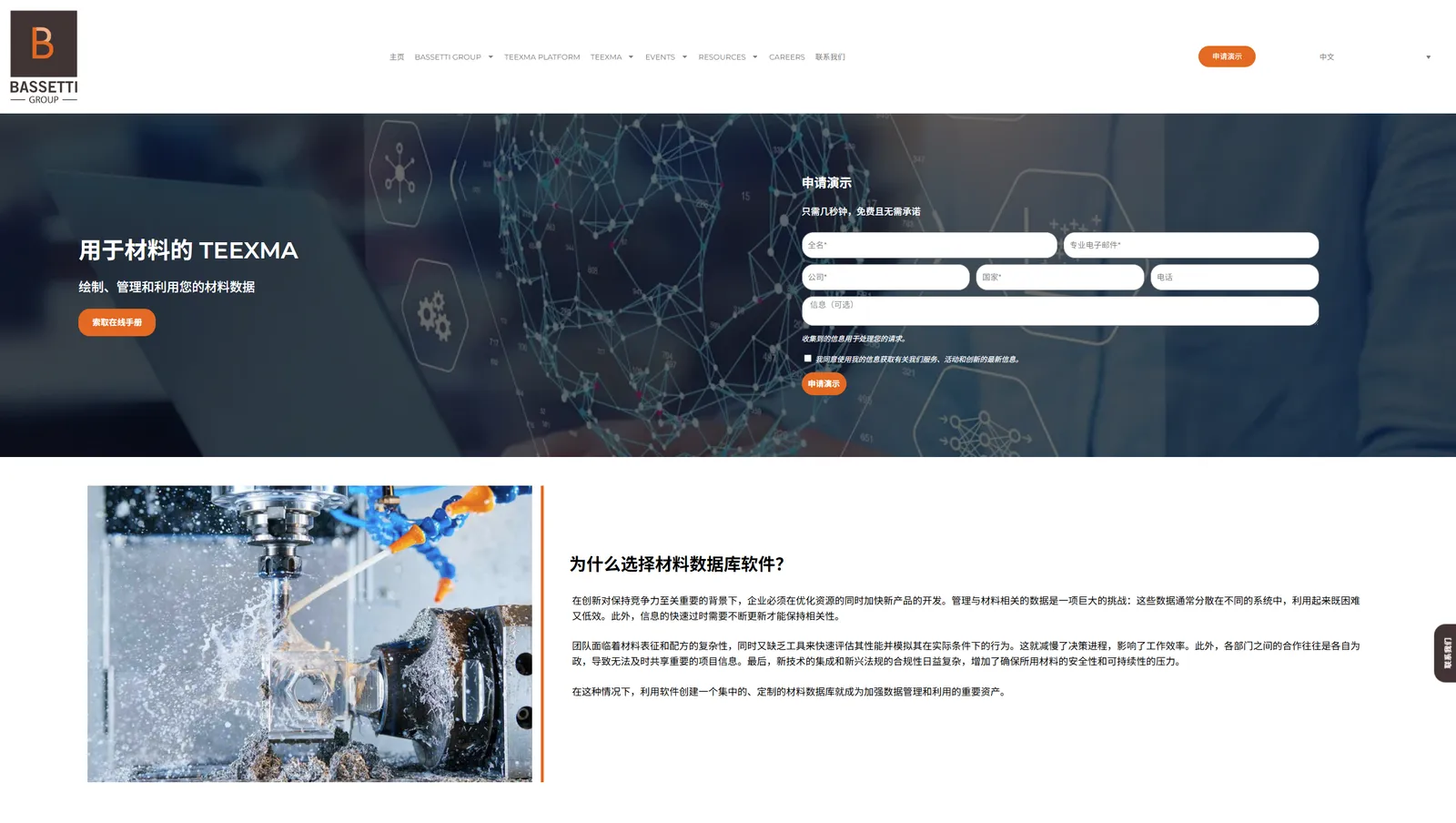
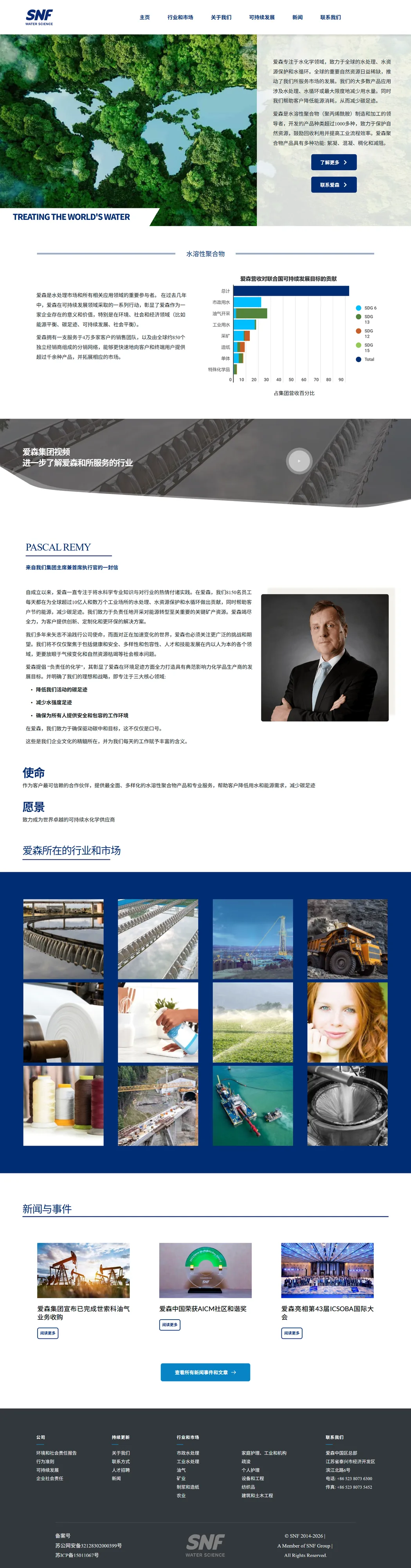
Two projects worth reading in full. Bassetti, a French engineering software vendor, moved a WordPress and Elementor site onto a mainland origin in six weeks, filing, .cn domain and dependency swaps included. SNF, the world's largest water-soluble polymer manufacturer, runs its China site on mainland hosting we maintain across two factories and six offices.

All case studies
Process · 流程

Fourteen weeks, four phases

The filing sits on the critical path and everything else waits behind it, so the plan starts there.

Phase Weeks What gates it
Plan 1 to 2 A mainland entity to hold the filing, or the Hong Kong decision
File 2 to 8 Alibaba Cloud review, then the provincial regulator
Build 3 to 12 Runs off-mainland in parallel with the filing
Launch and run 12 to 14 The filing clearing. Ports open that day.

Plan

Audit from a Chinese connection. Entity check, because a mainland company has to hold the filing, and if you don't have one this is where we talk about Hong Kong instead. Stack decision. Dependency list.

File

Alibaba Cloud's own review takes one to two working days. The provincial regulator then quotes up to 20 working days, and it varies by province. We plan three to six weeks and have rarely needed less. The production host is unreachable throughout, so the build happens elsewhere.

Build

Design, content, dependency replacement, Baidu readiness, on a staging server outside the mainland. Tested from Shanghai every week.

Launch and run

Cutover, DNS, the footer filing number, sitemap submission to Baidu. Then the retainer starts, because a mainland server needs someone watching the update path.

If the site takes payment, add the commercial licence: 60 to 90 working days at national level, so plan twelve to eighteen weeks for that alone.

Questions · 常见问题

Frequently asked

Do I need a Chinese company to have a website in China?

To hold an ICP filing, yes. The filing belongs to a mainland entity, and the hosting provider won't open the site without it. If you don't have one, we host from Hong Kong, which needs no filing and sits one network hop from Shenzhen. It's slower than a mainland origin and faster than anything in Europe or the US.

How long does a website in China take?

Fourteen weeks is our planning number from brief to launch, with the filing taking three to six of them. A smaller site with a mainland entity already in place can go faster. A site that takes payment needs a commercial licence and should plan for twelve to eighteen weeks on that alone.

Can't I just translate my existing site?

You can, and the translated site will load as slowly as the original and lose the parts that call Google. The slowness comes from the hosting and the dependencies, and translation changes neither. We usually keep your content and design, rebuild the plumbing underneath, then rewrite the Chinese with a Chinese writer.

WordPress or Astro for China?

Whichever fits the people who'll edit the site. WordPress when a team publishes often and needs a back office. Astro when the site changes on a release cycle and an editor would sit idle. Both work in China once the dependencies are cleaned up.

Will Baidu find my site?

If it's server-rendered, filed, hosted on the mainland and submitted through the Baidu Search Resource Platform, yes, and the first indexing takes two to four weeks. Baidu dropped fast inclusion in 2024, so there's no shortcut. Our Baidu SEO service covers submission, structured data and ongoing ranking.

What does a website in China cost?

It depends on whether the site is being built or moved, how many languages it carries, and whether it needs a filing or a commercial licence. We quote after the audit, with the hosting and the retainer priced separately from the build so you can see what recurs. A scoping call is enough to give you a range.

Where is your team?

Shanghai, Putuo district. Cyril Drouin has run digital businesses in China since 2005. Echo Peng runs delivery and has spent 18 years on e-commerce and digital for global brands here. Everyone who touches your site works from the Shanghai office.

Talk to the team in Shanghai.

Thirty minutes is enough to tell you whether your site needs a filing, a move, or a rebuild, and roughly how long each would take.