
China Web Guide
What you need to know
about the web in China
Practical, no-fluff articles about running a website behind the Great Firewall.

Maps in China: Licensing Before Firewall
Why your store locator breaks in China, and what a licensed mainland map provider changes.
GreatFire reads Mapbox's telemetry host as blocked and Google Maps as unreliable in China. The older rule: a public map there needs approval.

WeChat and Your China Website
The three WeChat properties a foreign brand ends up owning, where they overlap with the website, and what gets built twice.
Official Account, Mini Program and website. Where the boundary sits, what WeChat login can do, and what you build twice.

WordPress Security in China: Updates and Crawlers
Why a mainland WordPress install falls behind on patches, and how its own WAF can lock Baidu out.
Update calls get rate limited, so patches quietly stop. Then the security plugin meant to compensate blocks the crawler you are paying for.

How Baidu Crawls and Renders JavaScript
Baiduspider has rendered JavaScript since 2017. What that does and does not change for crawling and indexing.
What Baiduspider fetches, when it renders JavaScript, how to verify it, and how URLs reach the index. Crawl, render and indexing only.

Does Shopify Work in China?
How a Shopify storefront actually performs for Chinese visitors, and the two ways to fix it.
GreatFire reads Shopify’s CDN host as reachable. What decides a storefront in China is where it is served from, and no Shopify setting moves that.

WPML, Polylang or TranslatePress in China
WPML, Polylang and TranslatePress judged on what they call out to from a mainland server, and the Chinese codes each one prints.
WPML, Polylang or TranslatePress on a mainland server, judged by what each calls at runtime. Polylang serves pages with no outside call.
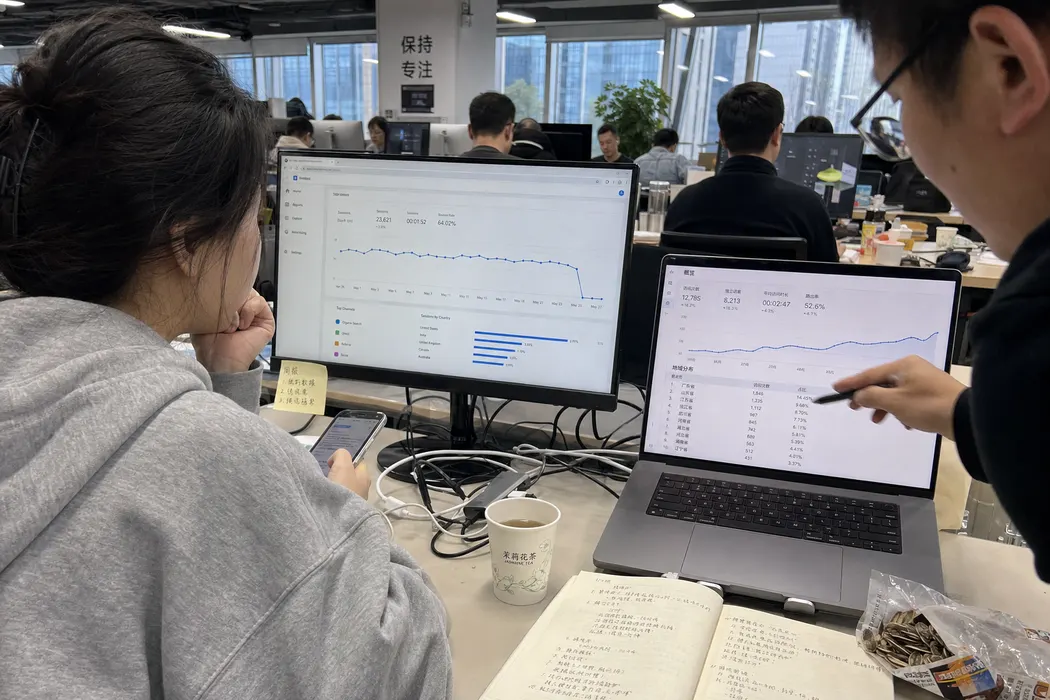
Website Analytics in China After GA4
What replaces GA4 and Tag Manager for mainland visitors, with dated third-party verdicts, and why the choice is a compliance call too.
GA4 hears nothing from mainland visitors, and PIPL turns an overseas collector into a legal question. Baidu Tongji, self-hosted Matomo, how to choose.

YouTube Embeds in China and the Video That Plays
Why the video on your China page shows an empty box, and the platforms that play instead.
GreatFire reads the YouTube and Vimeo players as blocked in China, Wistia as reachable and Loom as disrupted. What each does, and what plays instead.

Baidu SEO for a WordPress Site
The gap between what your SEO plugin does for Google and what Baidu actually needs.
Yoast and Rank Math give Baidu exactly one meta tag. Here is everything else that has to be done by hand, and the plugins that help.

Can Your Global Agency Build Your China Site?
Where a global agency stops being able to help on a China build, and how to divide the work cleanly.
Usually yes, for the half they are good at. The five things they structurally cannot do, and the split that works in practice.

Typeform in China: Four Form Embeds Checked
The form failure your team never sees, because it throws no error and loads fine from outside China.
GreatFire’s September tests read Google Forms, Jotform and Mailchimp’s style host as blocked in China. Typeform’s script is untested. The fix.
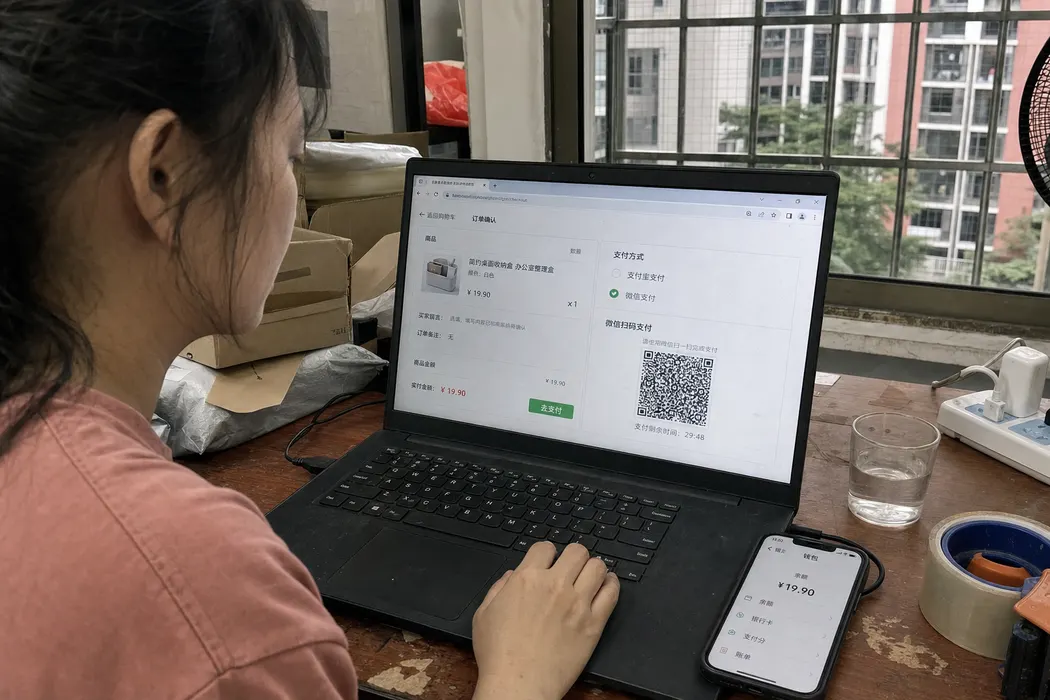
Accepting Payments on a China Website
Your merchant entity determines the payment route. Check account eligibility, wallet approval and checkout support before choosing a plugin.
Choose Alipay, WeChat Pay or UnionPay for your China checkout. Merchant eligibility, WooCommerce plugins and Shopify limits explained.

Why China Latency Tests Disagree
The same resource can answer from a cloud probe and fail on a home connection. Read the network, method and date together.
Why cloud and home-line results differ in China, using dated 21YunBox observations, exact hosts and separate request counts.

WordPress or Astro for a China Site
How to choose between WordPress and a static Astro build for China, argued from the way requests cross the border.
Choosing WordPress or a static Astro build for mainland China, argued from how requests cross the border, and what static costs a weekly publisher.
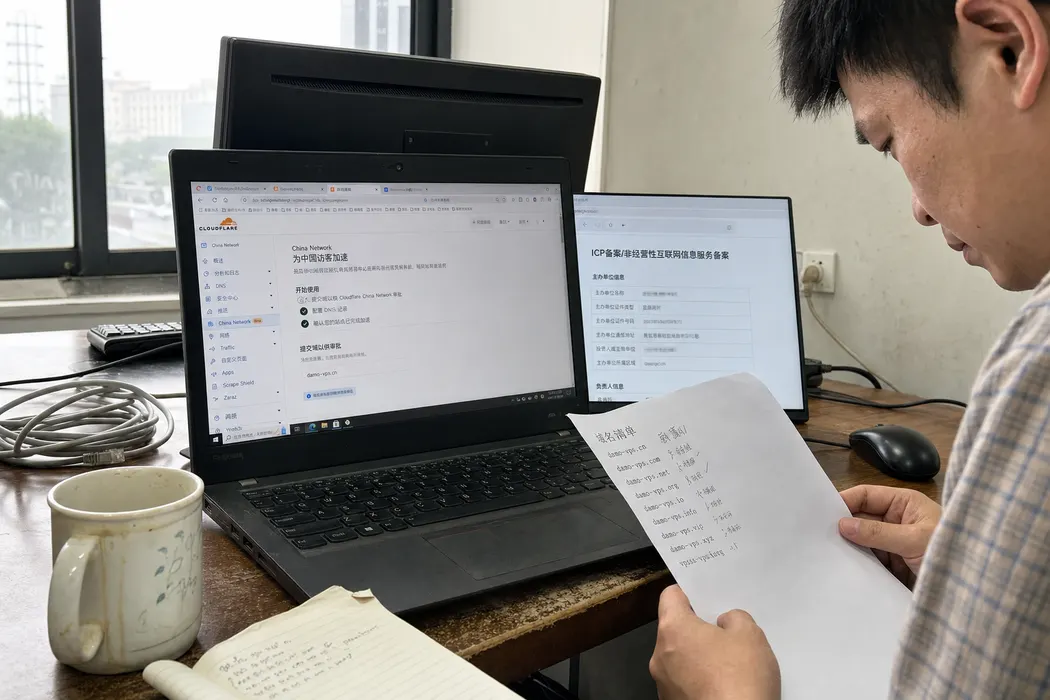
Cloudflare in China: ICP and network requirements
What Cloudflare does and does not do for Chinese visitors, and the filing requirement behind the in-country option.
Cloudflare China Network needs Enterprise, an ICP filing or licence per apex domain, and JD Cloud review. Check the requirements before switching.
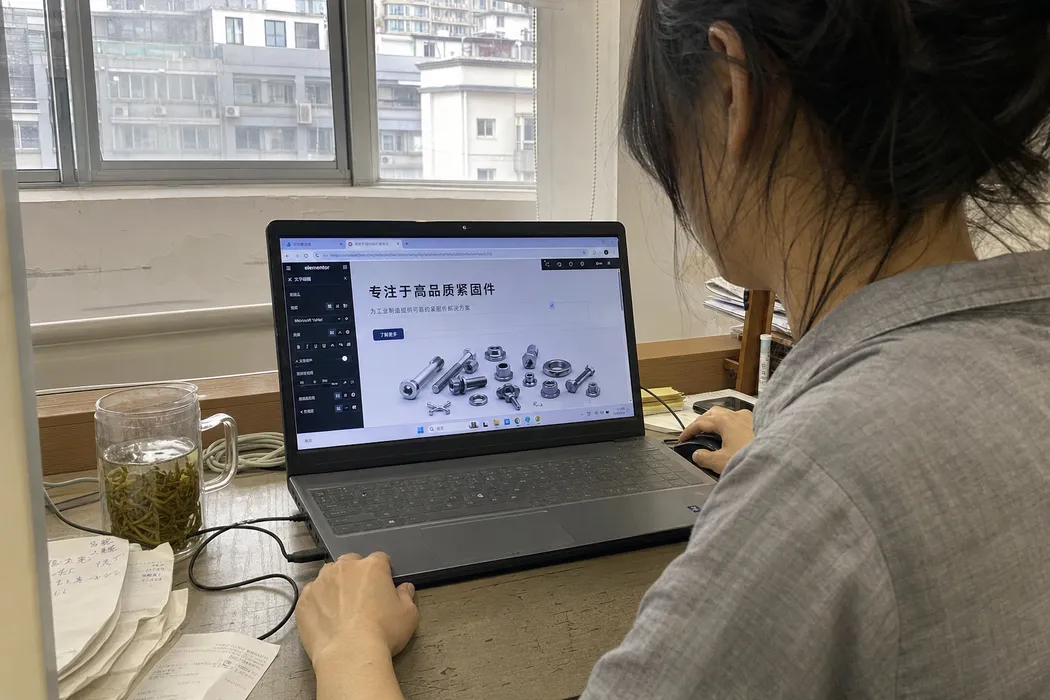
Elementor, Divi and Gutenberg in China
Compare font controls, editor requests and local assets before choosing a page builder for a mainland China website.
Elementor font settings, Divi controls and core Gutenberg dependencies for China sites. What the source confirms, including the editor caveat.

How Long a China Website Takes
The three clocks on a China web project, which ones overlap, and where teams routinely lose a month.
With a mainland entity in place we plan fourteen weeks. The entity and the ICP filing run in sequence and set the date. The plan, week by week.

China Dependency Index, October 2026
Dated third-party evidence for 55 web dependencies, with separate cloud and consumer results where sources publish both.
A 55-entry register of China web dependencies, using dated GreatFire verdicts and 21YunBox observations. Missing tests and limits included.

HubSpot in China: What Works and What Does Not
Which parts of a HubSpot stack have a dated test from inside China, which have none, and how to keep the lead when one fails.
HubSpot’s scripts and a HubSpot-hosted site carry different risks in China. What GreatFire’s tests show, what is untested, and the fix for each.
ICP Filing for a WordPress Site
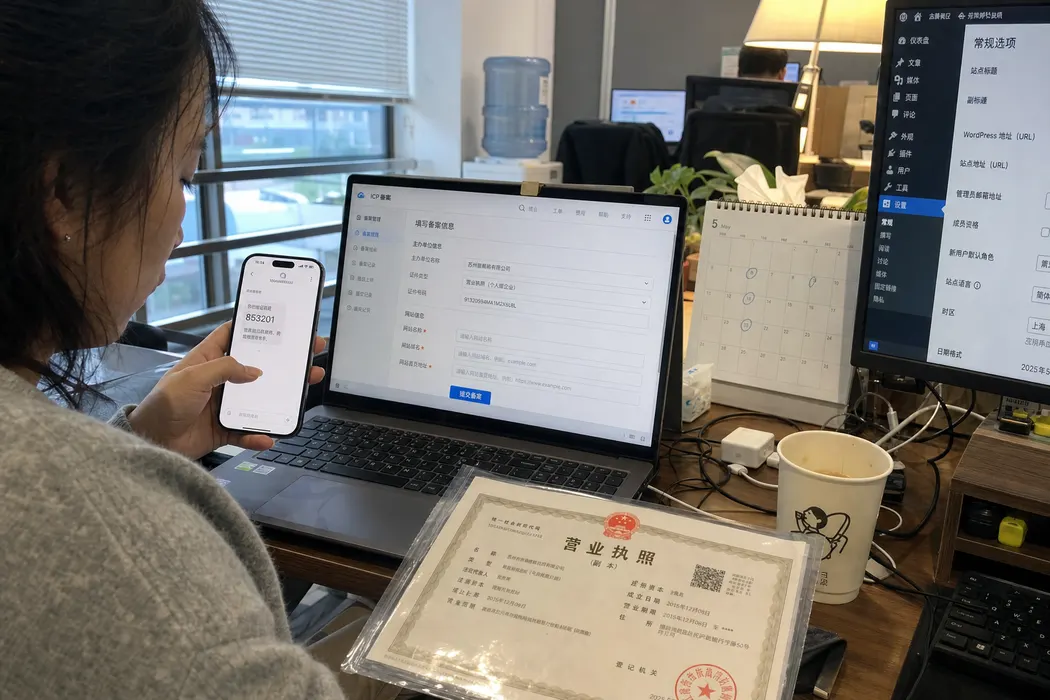
The WordPress half of the ICP filing: what the review checks on the site itself, and how to schedule a build around it.
What the ICP filing asks of the site itself: a domain kept dark during review, a name and content that match the record, and where it fits in a build.

Why wp-admin Is Slow in China
Why the WordPress back end crawls for a team in Shanghai while the public site loads, and the fixes that bring it back.
Your site is fine and your dashboard is unusable. Gravatar, the update servers and editor fonts are why, and most of it is fixable in an afternoon.

Which JavaScript CDNs Work in China
Google Hosted Libraries halts the render. cdnjs, unpkg and jsDelivr do not. The difference matters more than the category.
Google Hosted Libraries is blocked in mainland China and halts the page. cdnjs, jsDelivr and unpkg answer. Dated GreatFire and 21YunBox records.
reCAPTCHA in China: Your Forms Are Dead
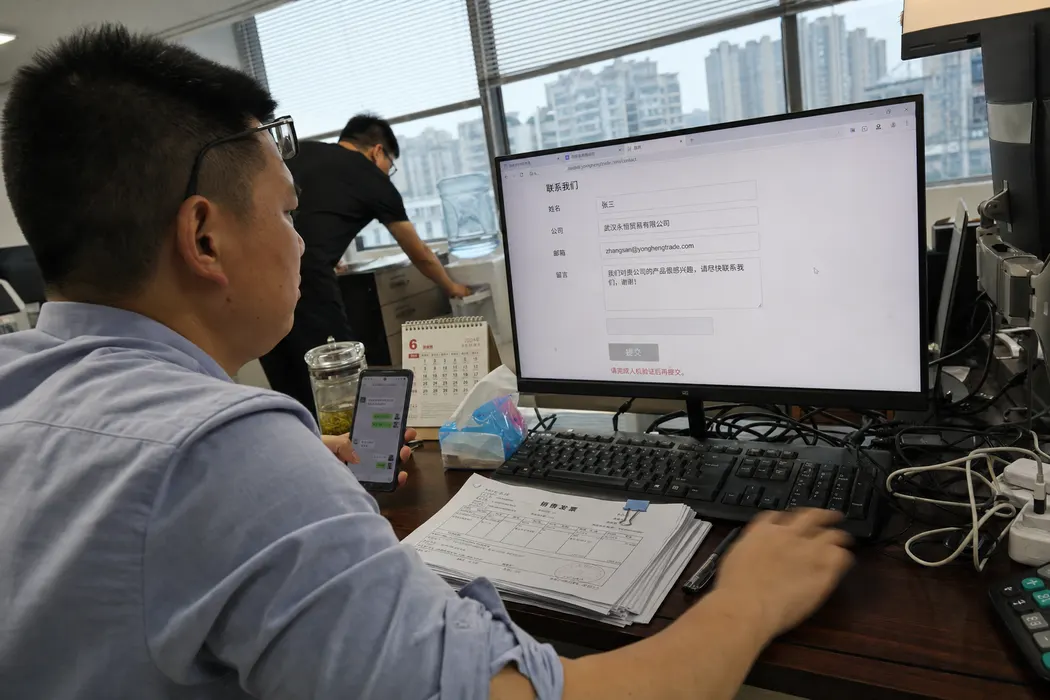
Why visitors in mainland China cannot send a form protected by reCAPTCHA, what Google’s recaptcha.net swap changes, and what to use instead.
GreatFire reads Google’s reCAPTCHA addresses as blocked in mainland China, so protected forms turn visitors away. Google’s swap and the alternatives.

The China Website Brief: A Checklist
What to specify before you brief a China web agency, and the answers that separate a specialist from a generalist.
A brief written for a Western build misses the six things that decide a China project. The checklist to send any vendor, including ours.

Google Fonts in China: It Depends Where You Are
The Google Fonts answer changes with the network you test from, which is why the flat versions of it keep contradicting each other.
111ms from a mainland datacentre and zero of 54 requests from a Beijing home line, both from 21YunBox’s probes. Why both numbers are real.

Migrating a WordPress Site Into China
What actually gates a China migration, in what order, and why the ports stay closed until the filing clears.
The ICP filing sits on the critical path and everything waits behind it. A realistic fourteen-week sequence, with the blockers named.
Why Your WordPress Site Is Slow in China
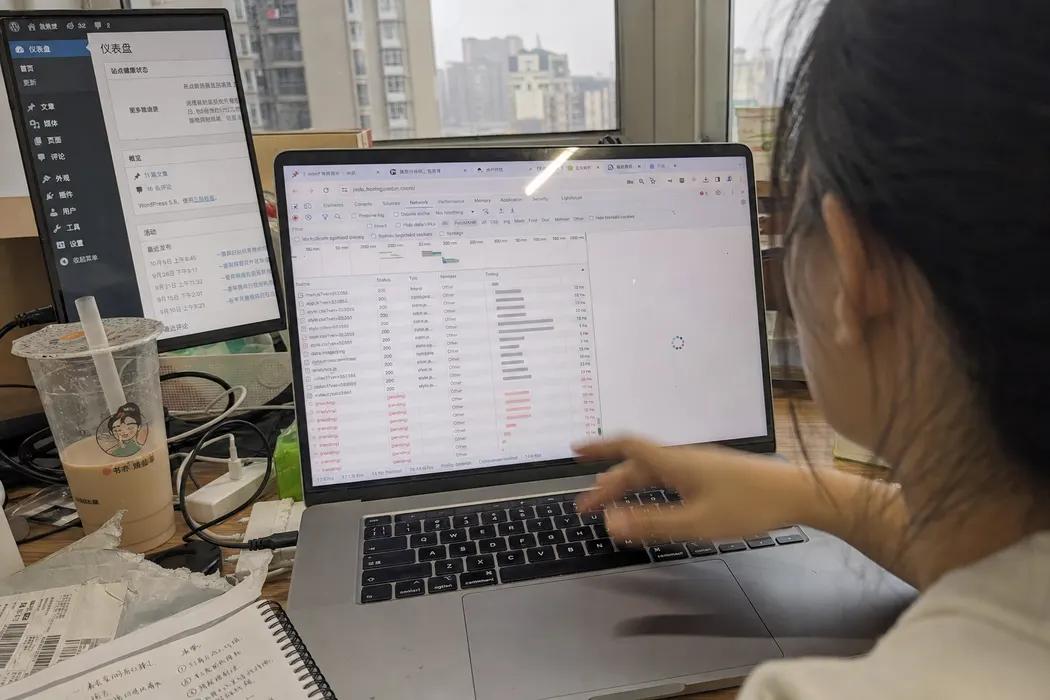
The real causes of slow load times behind the Great Firewall, ranked, with a measured before and after.
Four causes, in the order they cost you. A measured case from 23.4 seconds to 1.2, and what a delivery layer fixes versus what it cannot.
WordPress Plugins That Break in China
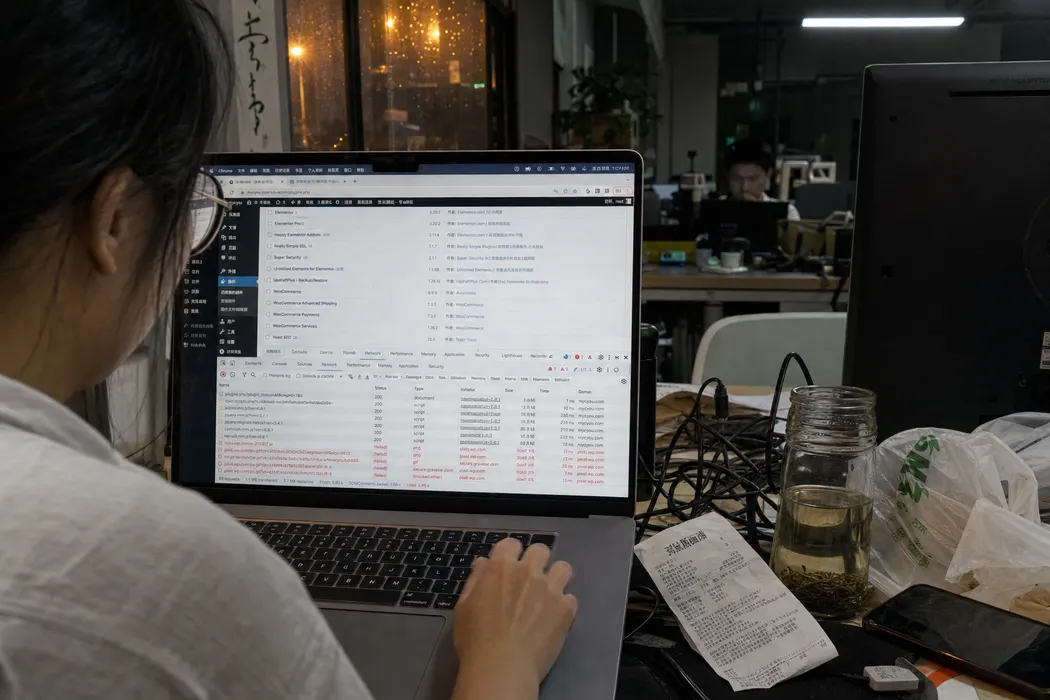
The outbound hosts a WordPress plugin stack reaches for, and which of them actually fail behind the Great Firewall.
Audit WordPress plugin dependencies in China with dated network tests, local font settings and practical fixes for scripts, forms and cloud services.

How to Choose a Web Agency in China
Four kinds of vendor sell China websites, and only one builds, files, hosts and ranks them. How to tell them apart before you sign.
The four vendor types on every China shortlist, compared on filing, hosting, Chinese copy and Baidu, plus eight questions for the first call.
Google Analytics in China without slowing your site
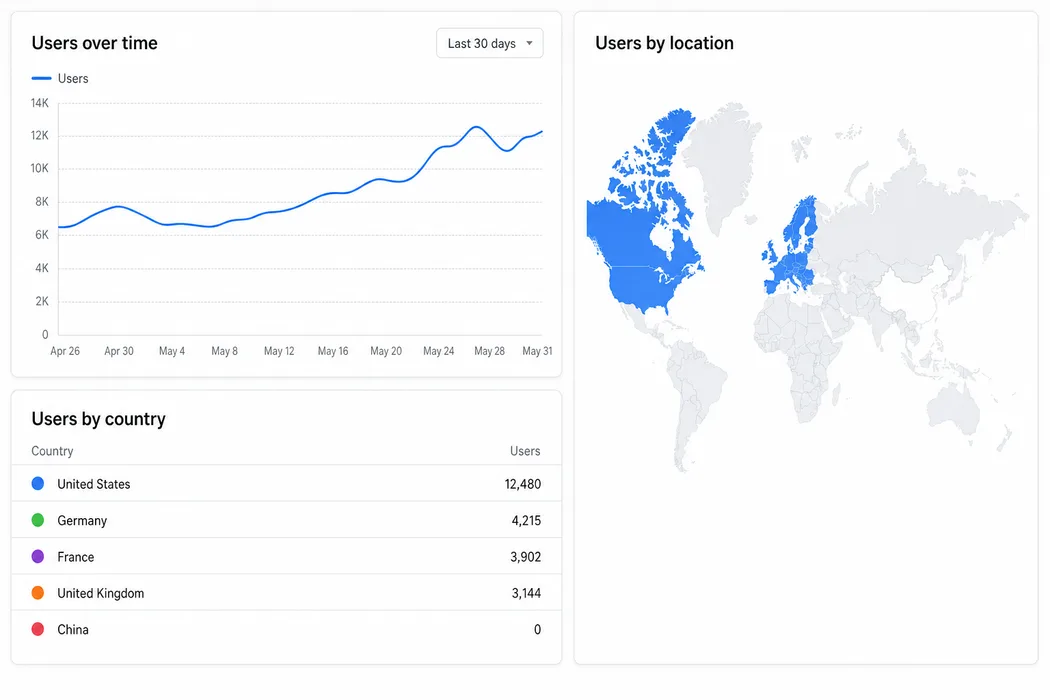
GA4 is blocked behind the Great Firewall. You can still run it for everyone else, if the load decision happens on the server.
How to geo-gate Google Analytics at the edge so GA4 keeps working outside China while visitors inside the Great Firewall never send a byte to Google.
Is WordPress blocked in China?
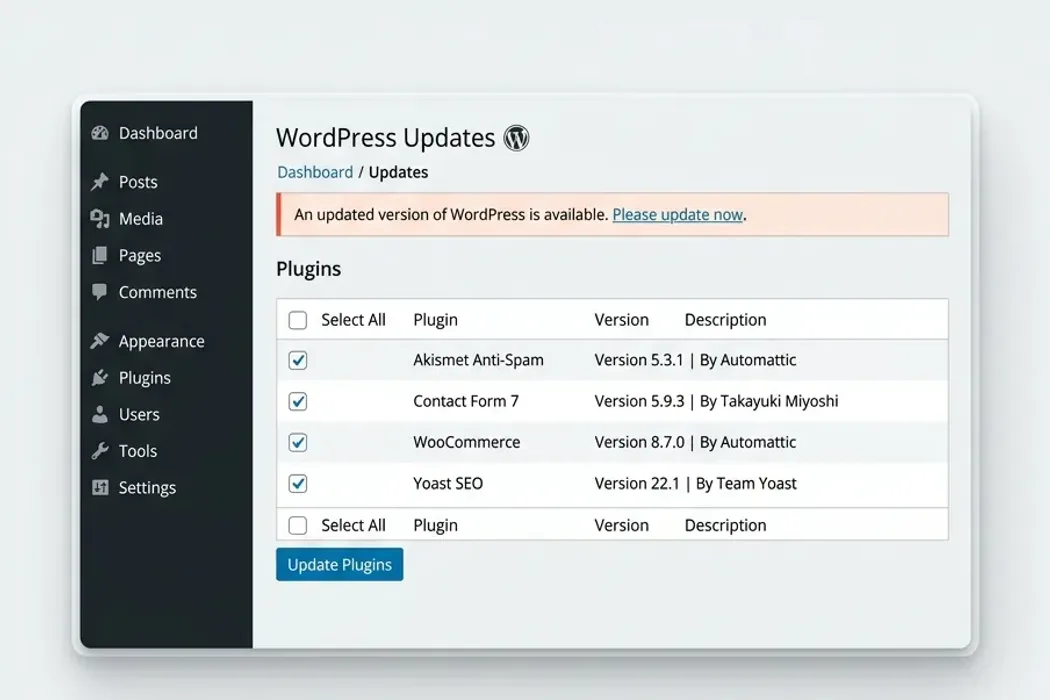
The software runs fine on a mainland server. Its outside calls are the problem. Measured from two vantage points, 28 and 30 August 2026.
WordPress isn't blocked in mainland China. Here's the 2026 list of which dependencies really fail, which are only slow, and which ones guides get wrong.

WordPress Hosting in China
All three major Chinese clouds ship a one-click WordPress image. None of them ships managed WordPress, and that gap is where foreign projects stall.
Alibaba, Tencent, Huawei, Vercel and Cloudflare compared for WordPress in mainland China, with the ICP filing rule first and our own measured figures.
Who Owns Your Baidu Account?
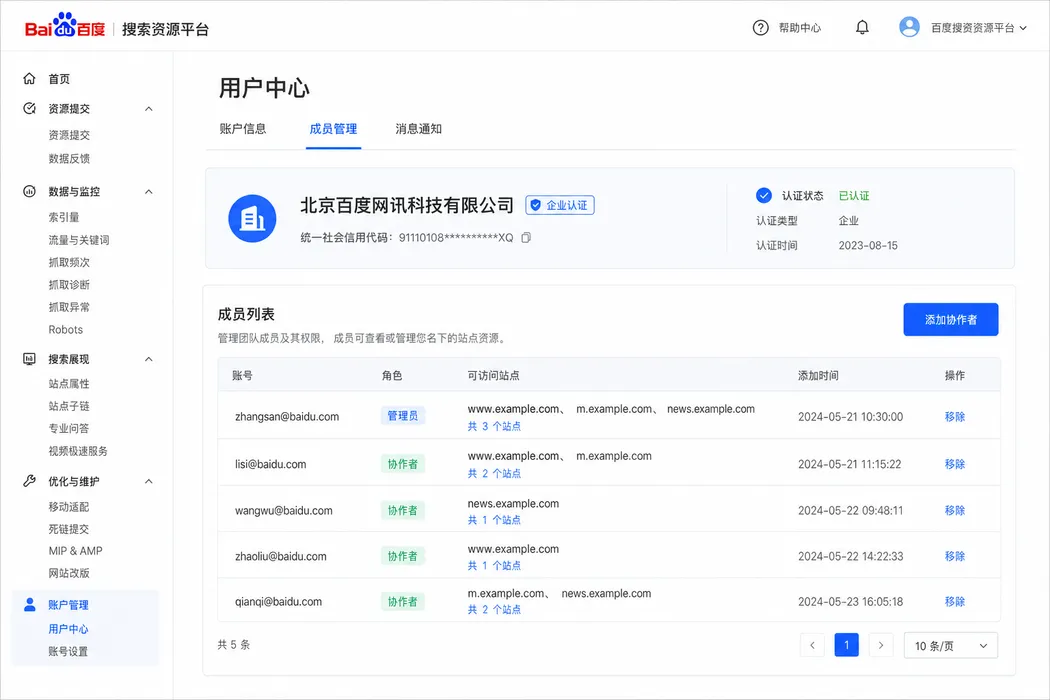
Ask whoever runs your China marketing who holds the login for your Baidu search property. If the answer takes more than five seconds, or comes back as a person's name, that is an hour of legal time well spent.
Real-name verification is Baidu's ownership record. If your agency or a former employee holds it, they hold the asset. Baidu publishes no transfer flow.
What Is the Baidu Search Resource Platform?
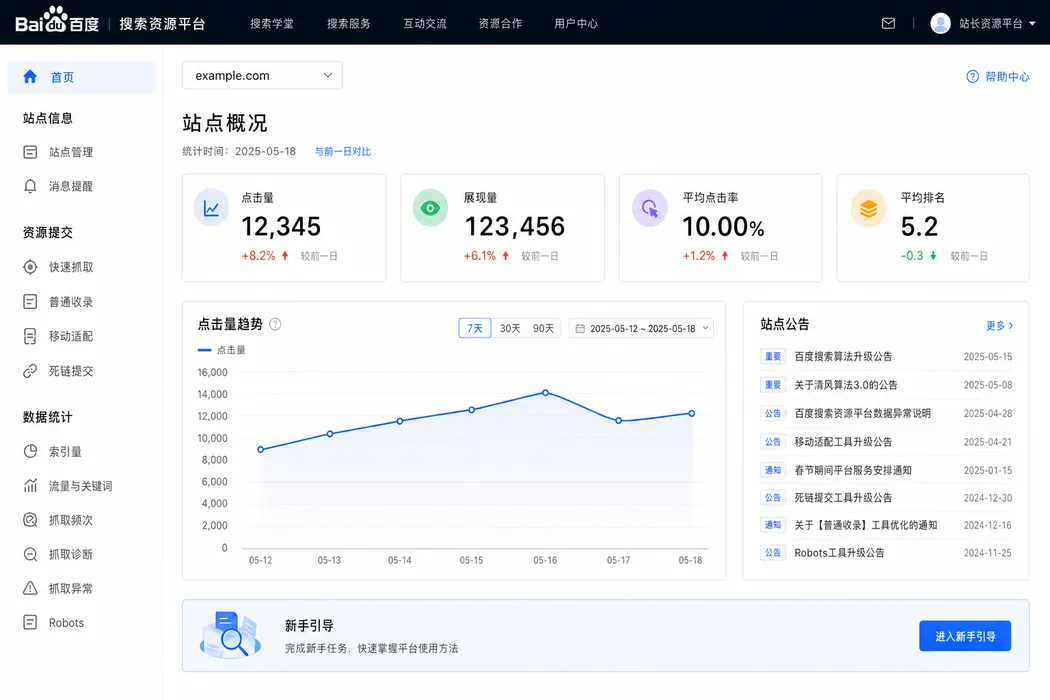
Most foreign companies arrive in China with a Baidu SEO budget and no Baidu login. The budget goes on content. Nobody creates the login. Six months in, there is a meeting about why none of it ranks.
Baidu's webmaster platform is where China SEO is actually run. What every tool does, and which three tools the guides still recommend are dead.
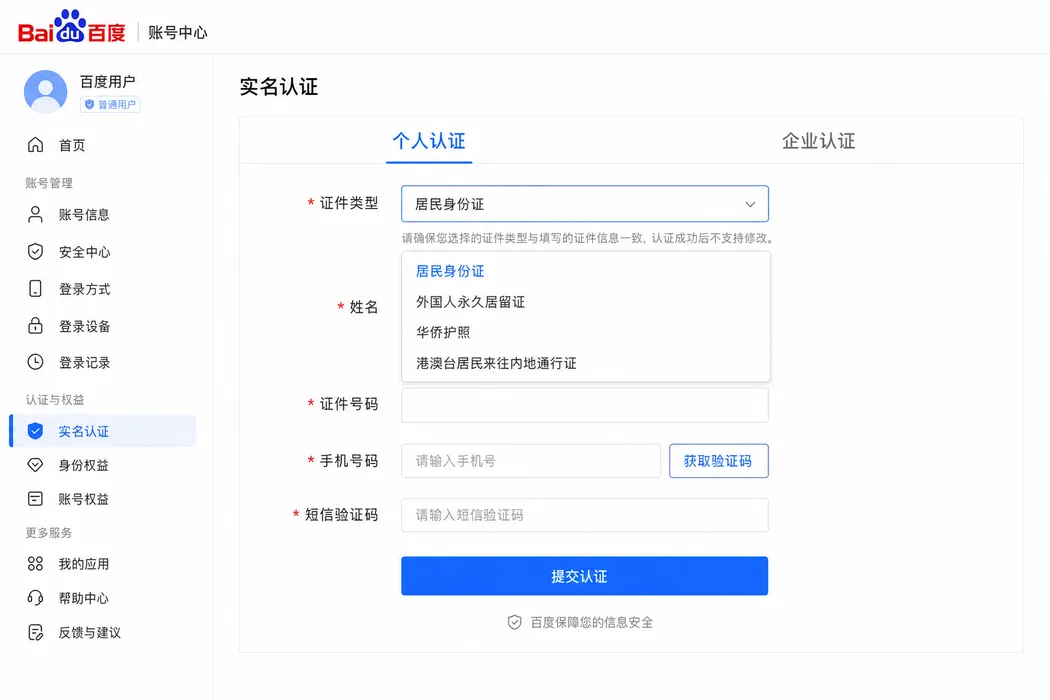
Getting a Baidu Account as a Foreign Company
Everyone warns you about the Chinese phone number. Almost nobody mentions the identity document, which is the requirement that stops foreign companies at the door.
A Chinese mobile number is the obstacle everyone talks about. The identity document requirement is the one that actually stops foreign brands.
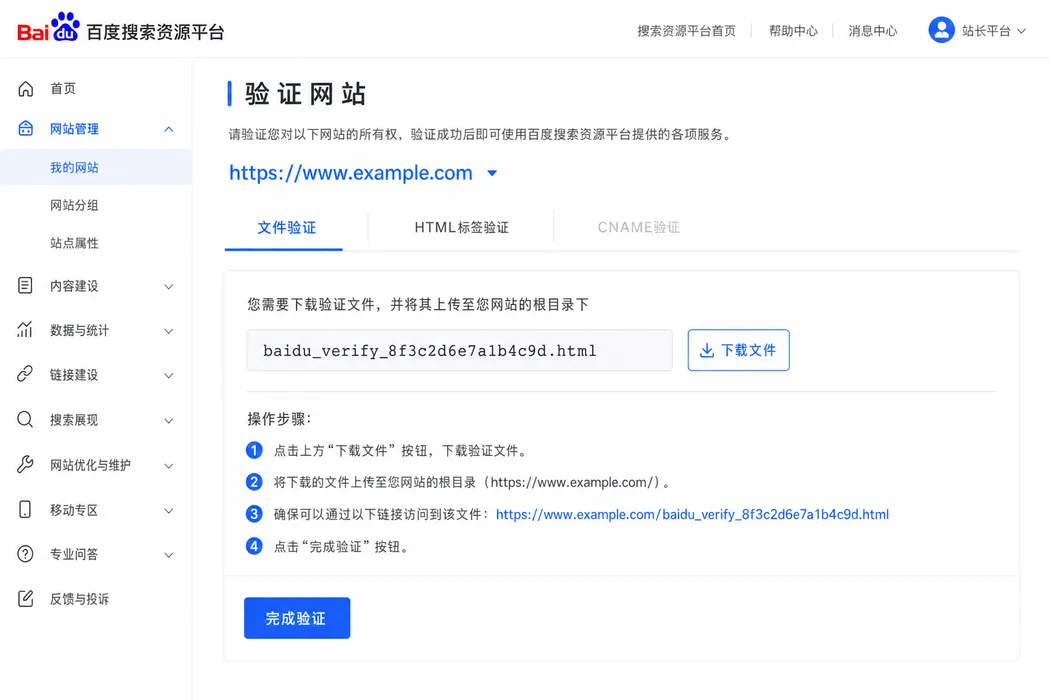
Verify Your Site on Baidu: File or HTML Tag
Two verification methods work. A third is still printed in most English guides, and it has not worked since the first quarter of 2023.
Two verification methods still work on Baidu's platform, and CNAME is not one of them. Exact file names, tag placement, WordPress and Astro notes.
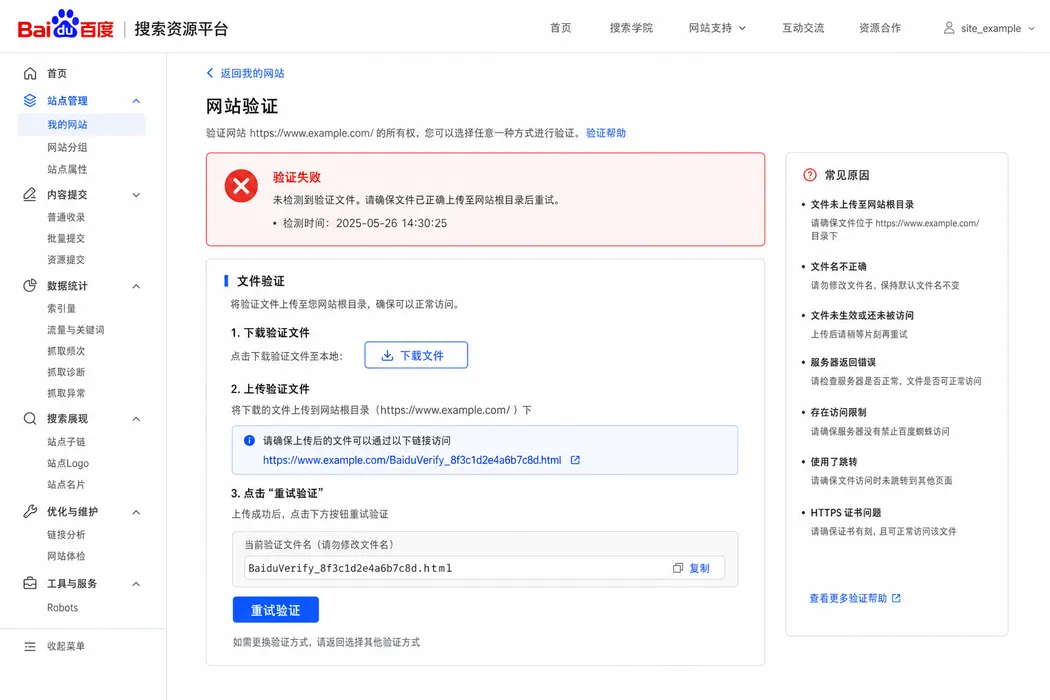
Baidu Site Verification Failed: The Usual Causes
Baidu gives you one line of red text and nothing else. The file it says is missing loads fine in your browser, at your desk, in Frankfurt. Those two facts coexist, and the gap between them is the whole problem.
Baidu verification failed? Every common cause, what each one looks like from the outside, and the fix: redirects, robots.txt, WAFs, DNS, accounts.
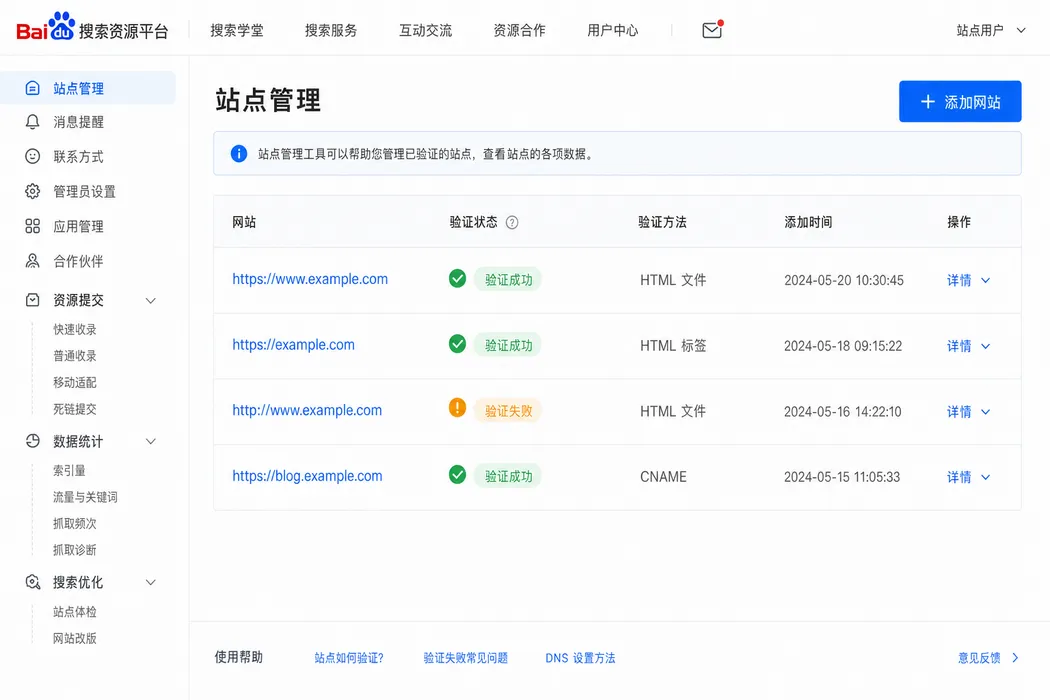
Baidu Verification: www, HTTPS and Subdomains
In Google Search Console a domain property covers both protocols and every subdomain under one roof. Baidu has no equivalent. What you verify is what you get.
On Baidu, http and https are separate sites, www and non-www are separate hosts, subdomains inherit a verified root, and folders cannot be added.
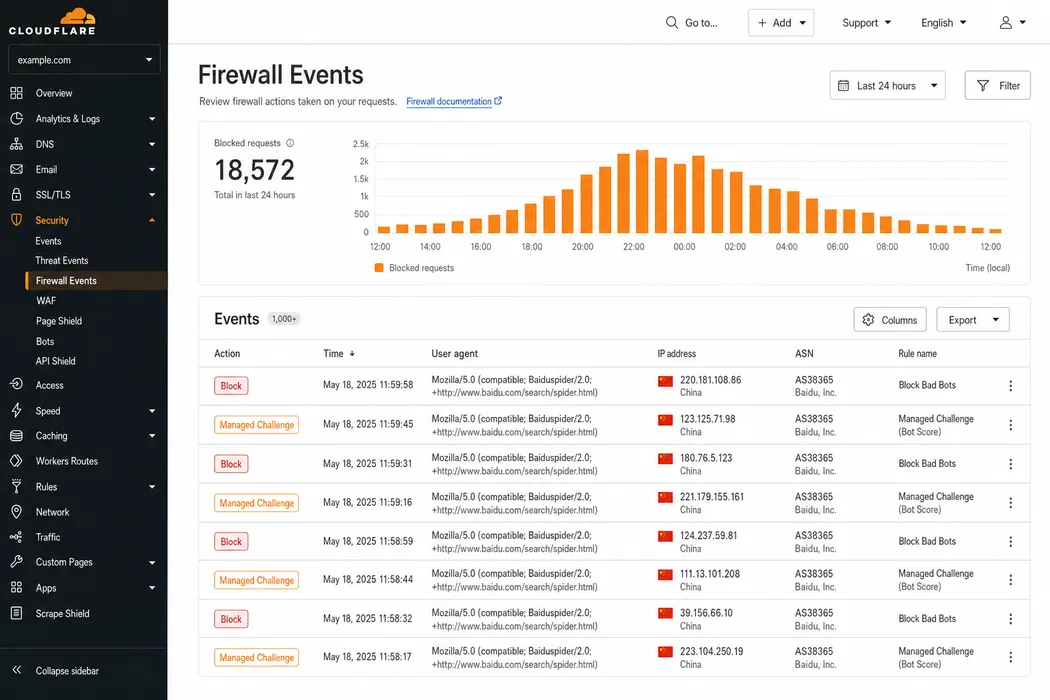
Baiduspider Blocked by Cloudflare and WAF Rules
The site is up and the CDN dashboard is healthy, yet six weeks of Chinese content have left Baidu's index count at zero.
Cloudflare, WAF rules and WordPress security plugins block Baiduspider silently. How to spot it, verify the crawler by reverse DNS, and fix it in order.
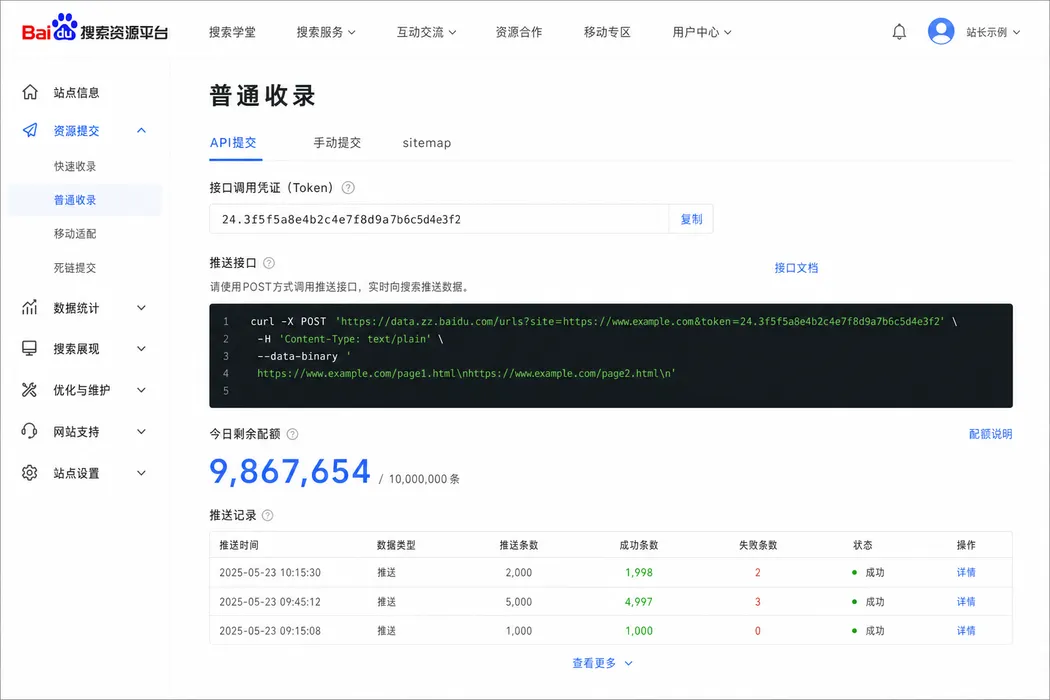
Submit a Website to Baidu: Push, Sitemap, Manual
The developer finishes the sitemap, logs into Baidu, goes looking for the box to paste it into, and cannot find it. Nothing is broken. Most of the time the tool is missing because the account has not earned it.
How to submit a website to Baidu when the sitemap tool is missing: the API push endpoint, real quota behavior, and manual submission.
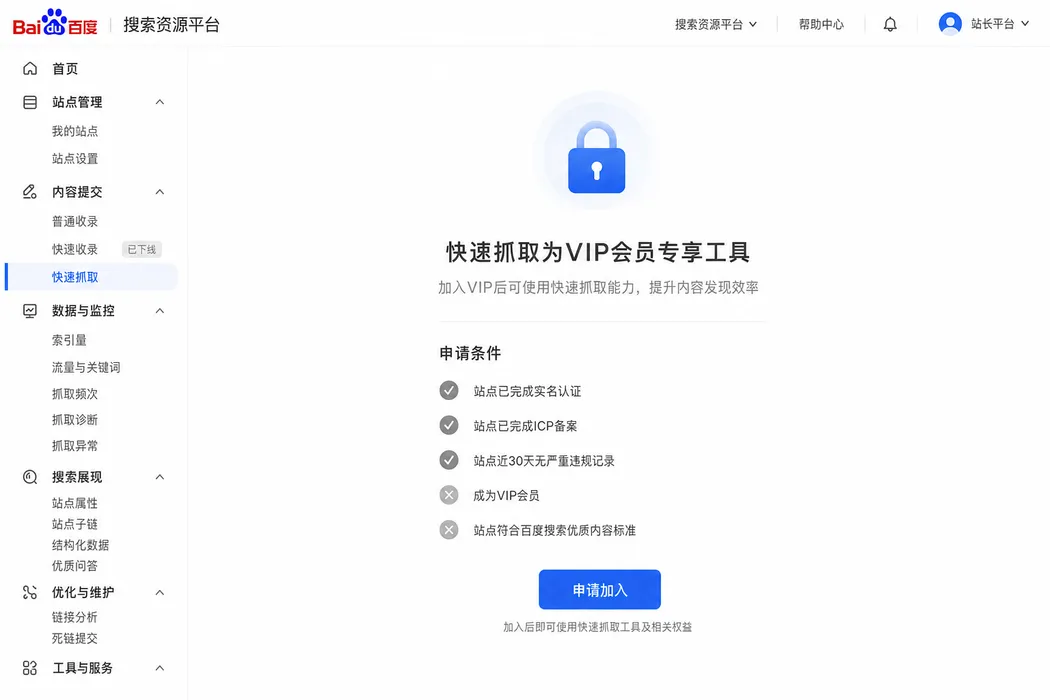
Baidu Fast Inclusion Is Gone. What Replaced It
Somewhere this week a China SEO checklist is landing in a new client's inbox, and step four says to switch on fast inclusion. That tool has not existed since April 2024. The checklist goes around anyway, usually with a price attached.
Baidu retired fast inclusion in April 2024. What Baidu fast crawl replaced it with, who qualifies, and what a new site should do instead.
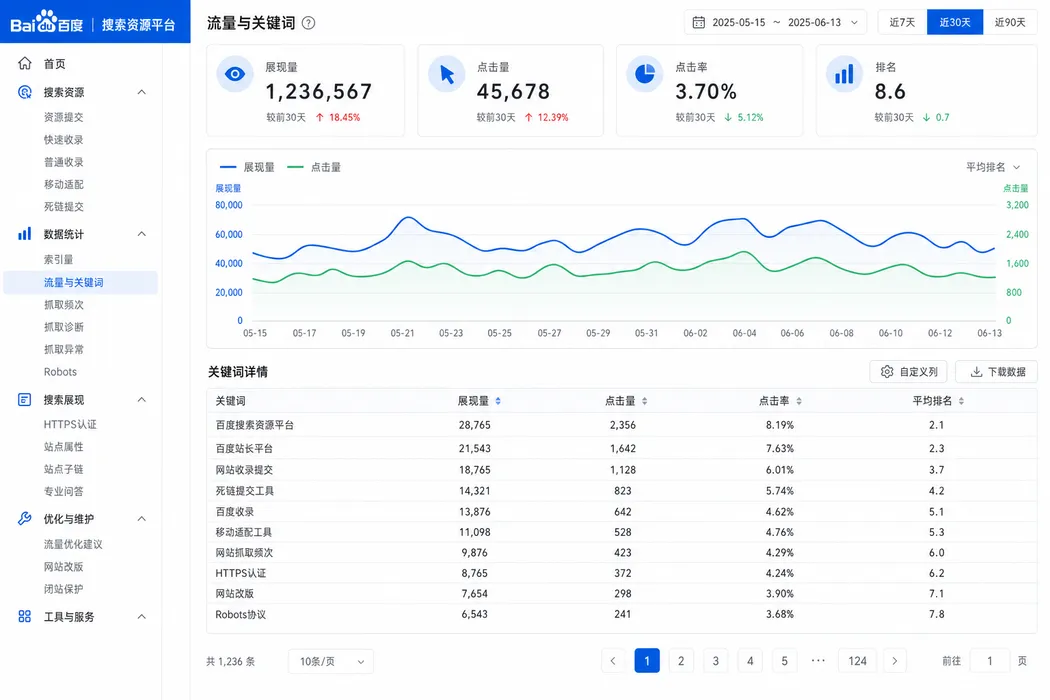
Reading Baidu's Index Volume and Traffic Data
Two weeks after launch, somebody in marketing finally logs into the Baidu Search Resource Platform. Index volume: zero. Traffic and keywords: empty. Crawl frequency: a flat line. The obvious reading is that the site is broken. Usually it is not.
What Baidu's index volume, traffic and keyword reports actually measure, how far to trust each one, and when a new site should expect data.
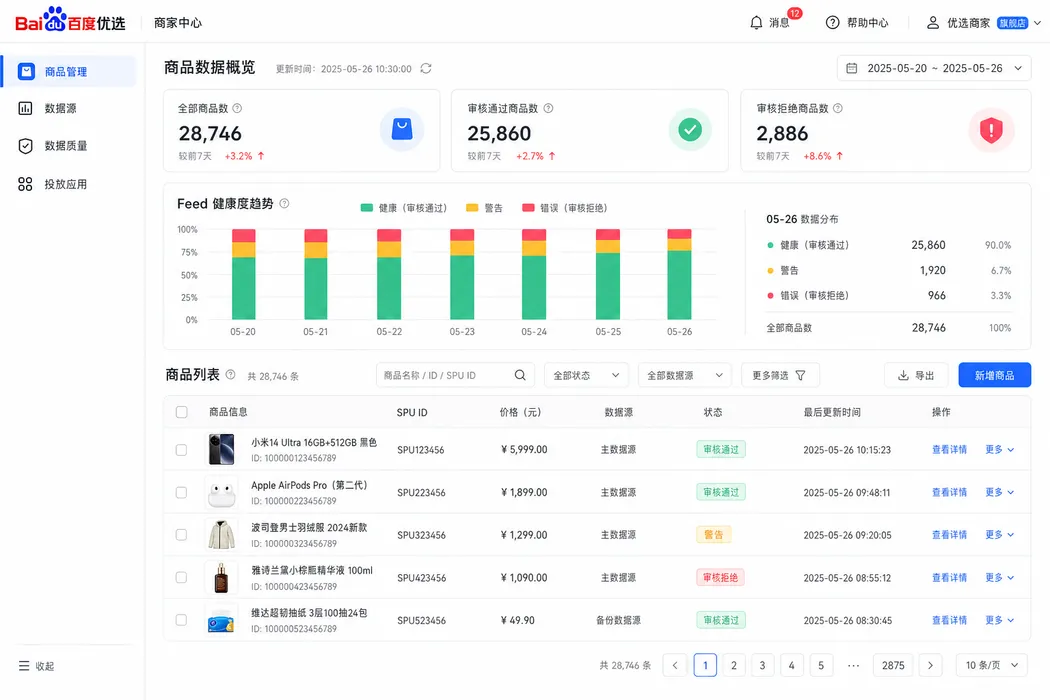
Baidu Merchant Center: What BMC Actually Does
Somebody on your team has been told that Baidu Merchant Center is how product data gets into Baidu. Roughly true, and roughly true is where the planning goes wrong. Which account owns the tool, what the data may do once it is loaded, and whether anyone at Baidu still maintains the product are separate questions with answers most teams guess wrong.
Baidu Merchant Center is an ads-account product feed, not an organic tool. What BMC does, where the console lives, and who still maintains it.
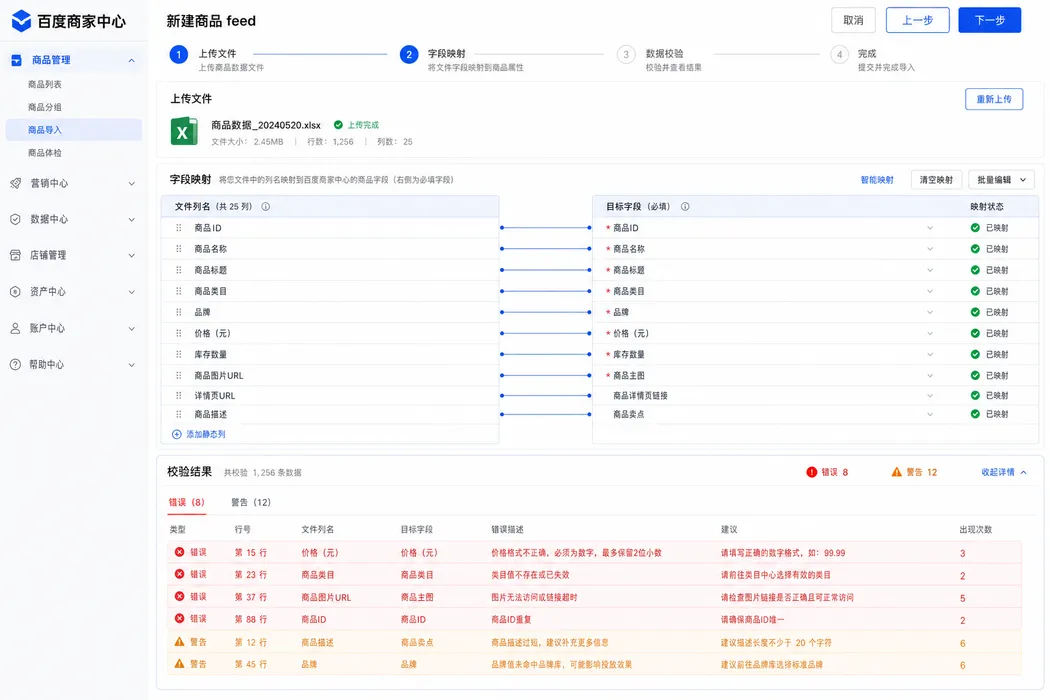
How to Build a Baidu Product Feed
The task arrives sounding small. Get the catalog into Baidu Merchant Center. Then you go looking for the plugin and there isn't one. No WooCommerce extension for this exists, free or paid. The export is custom work, written against a 2019 specification that mostly sits behind a login.
How a Baidu product feed is structured, the five ways to load it, and the field rules that quietly break a WooCommerce or headless export.
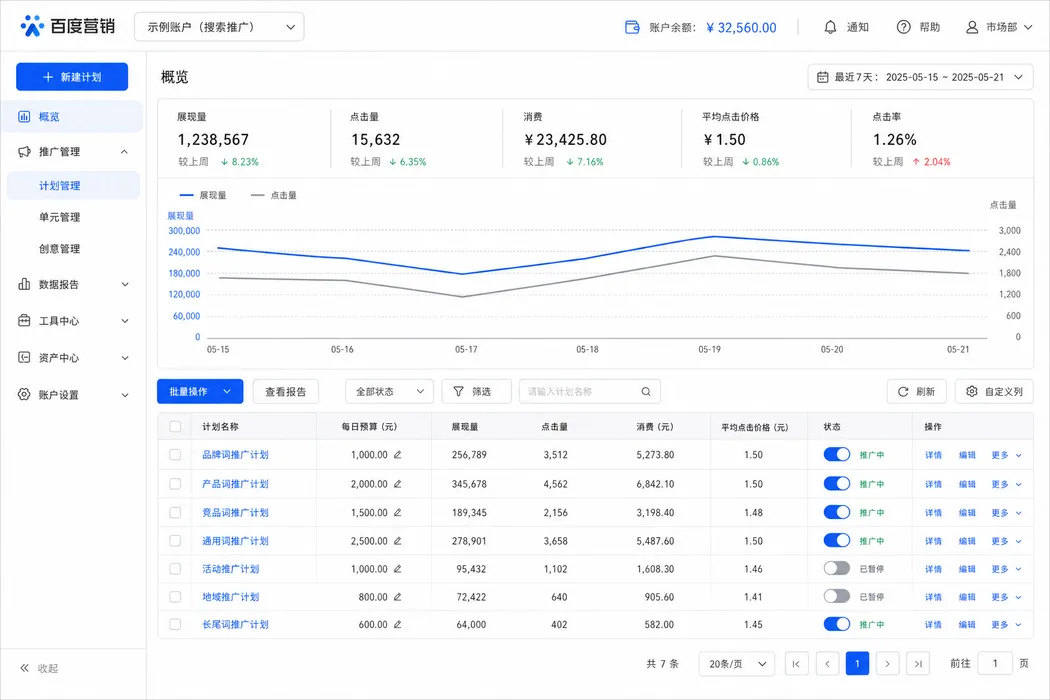
A Baidu Ads Account Without a Chinese Entity
Merchant Center product feeds, dynamic product ads, paid Aladdin placements. Most of what a foreign brand wants out of Baidu sits behind an advertising account, and the standard way to open one starts with a mainland company you do not have.
Two routes open a Baidu ads account for a foreign company with no mainland entity. What each requires, how long it takes, what it costs you.
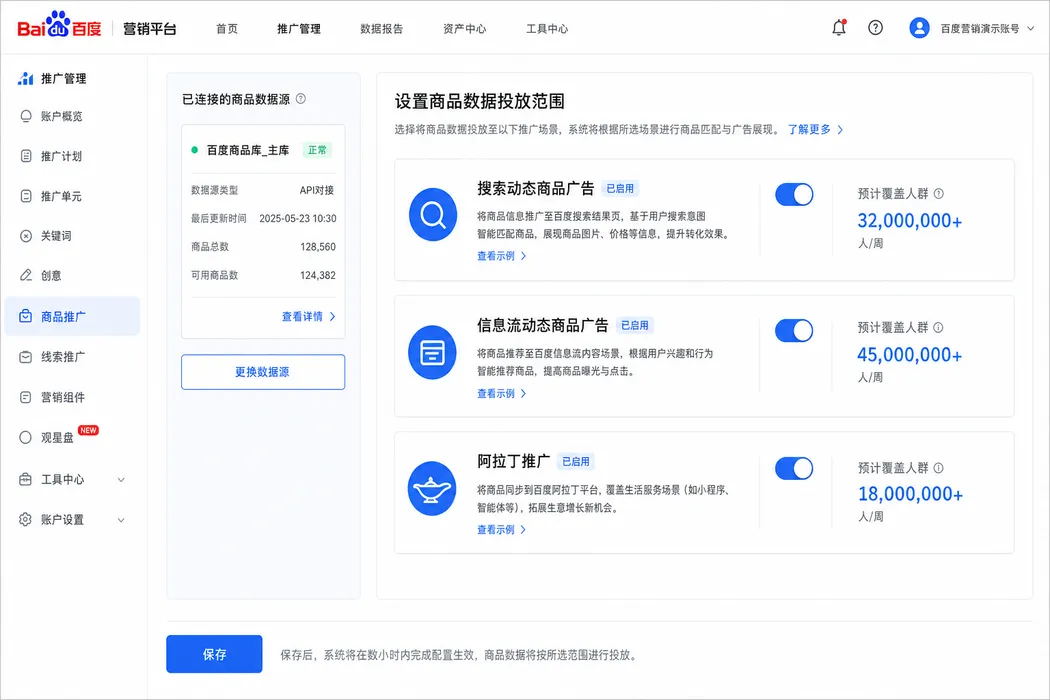
Baidu DPA: Where Product Feed Data Actually Goes
Somewhere in the sales conversation, a product feed became free visibility. Load the catalog into Baidu Merchant Center and your products start showing up in Baidu search. That pitch survives because Baidu's own vocabulary invites it and English write-ups have repeated it for years. None of what follows says the feed does nothing. It says where the data is documented to go.
Baidu documents three destinations for product feed data, all paid: search DPA, feed DPA and paid Aladdin. No documented organic path exists.
Baidu Aicaigou: B2B Search in China
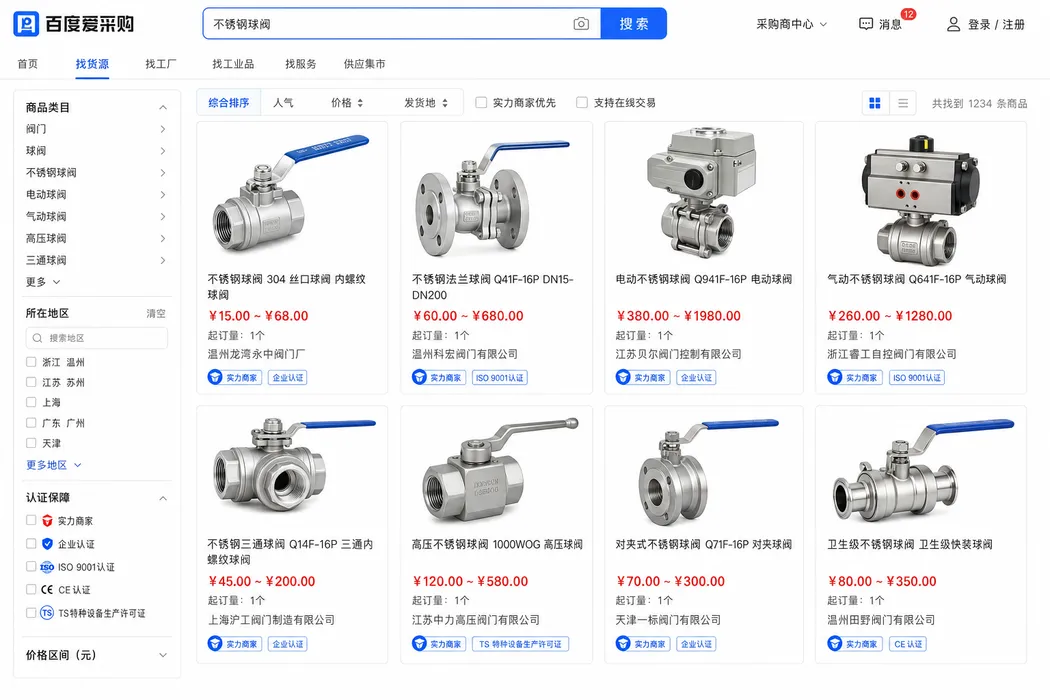
Foreign B2B companies read a Baidu results page the way they read a Google one. Ads at the top, labeled as ads, then the real results underneath. On commercial queries in industrial categories that reading is wrong. The block above everything is often a marketplace Baidu owns, and the buyer who clicks into it ends up shopping a supplier list instead of reading your site.
Baidu Aicaigou is a paid B2B marketplace that outranks your own site on commercial queries. What it costs, how to get in, and when it is worth it.
Baidu Structured Data: What Still Works
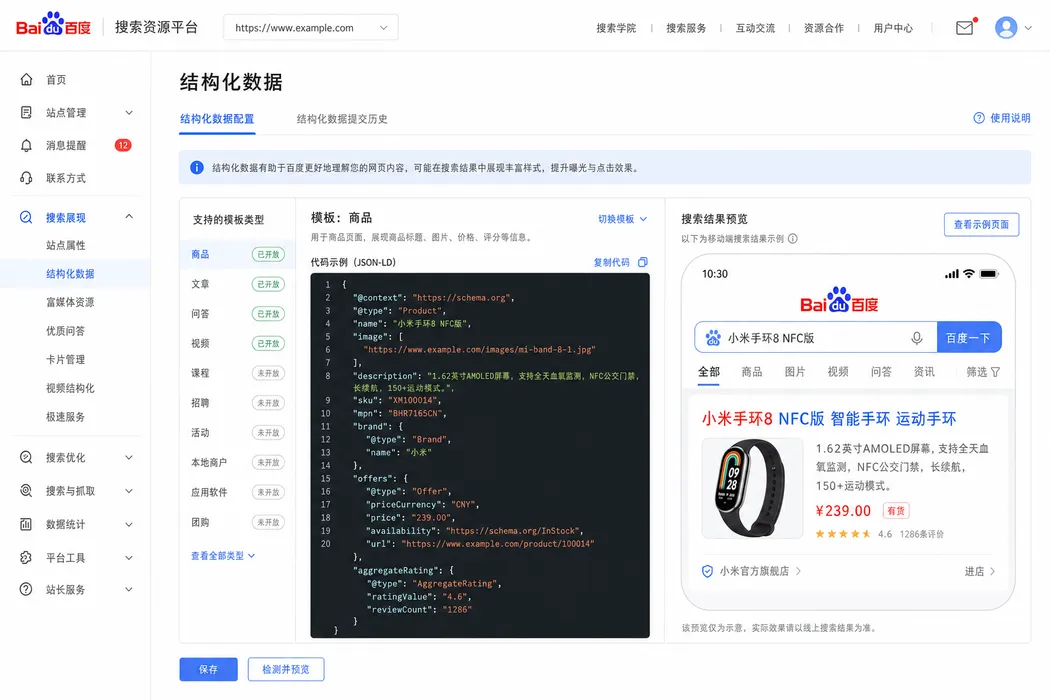
The markup ships in the first sprint. JSON-LD in the head, Organization and BreadcrumbList and Product, the same block that goes out on every site the team builds. Then somebody asks how you confirm Baidu picked it up, and the room goes quiet. There is no report to open.
Baidu never published a schema.org spec or a validator. What died, how OpenCard actually works, and which markup is still worth shipping anyway.

Host a Website in China: Step by Step
The entity, the domain, the server, the ICP filing, the launch and the public security filing, in the order each one depends on the last.
How to host a website in mainland China, step by step: entity, domain checks, the filing server, ICP review times, launch and the PSB filing.

How to Vet a WordPress Agency for China
A web shop cannot file your ICP, host inside the mainland, or build around the Great Firewall. Here is how to hire one who can.
The capabilities that separate a China WordPress specialist from a generic agency, and the questions that expose the difference on the first call.

WooCommerce China: Build a Store That Sells
Choose a payment route your business can use, then check the checkout, delivery details and mainland hosting requirements.
Plan a WooCommerce store for China: merchant eligibility, Alipay and WeChat Pay, checkout dependencies, delivery details and ICP filing.

Content Marketing in China: Planting Grass
Effective content marketing in China runs on 种草 - planting seeds of desire long before anyone is ready to buy.
China's content marketing revolves around 种草 (zhongcao): planting desire before purchase. This guide covers platforms, formats, and key shopping events for foreign brands.
China Data Privacy: PIPL, DSL and Cybersecurity
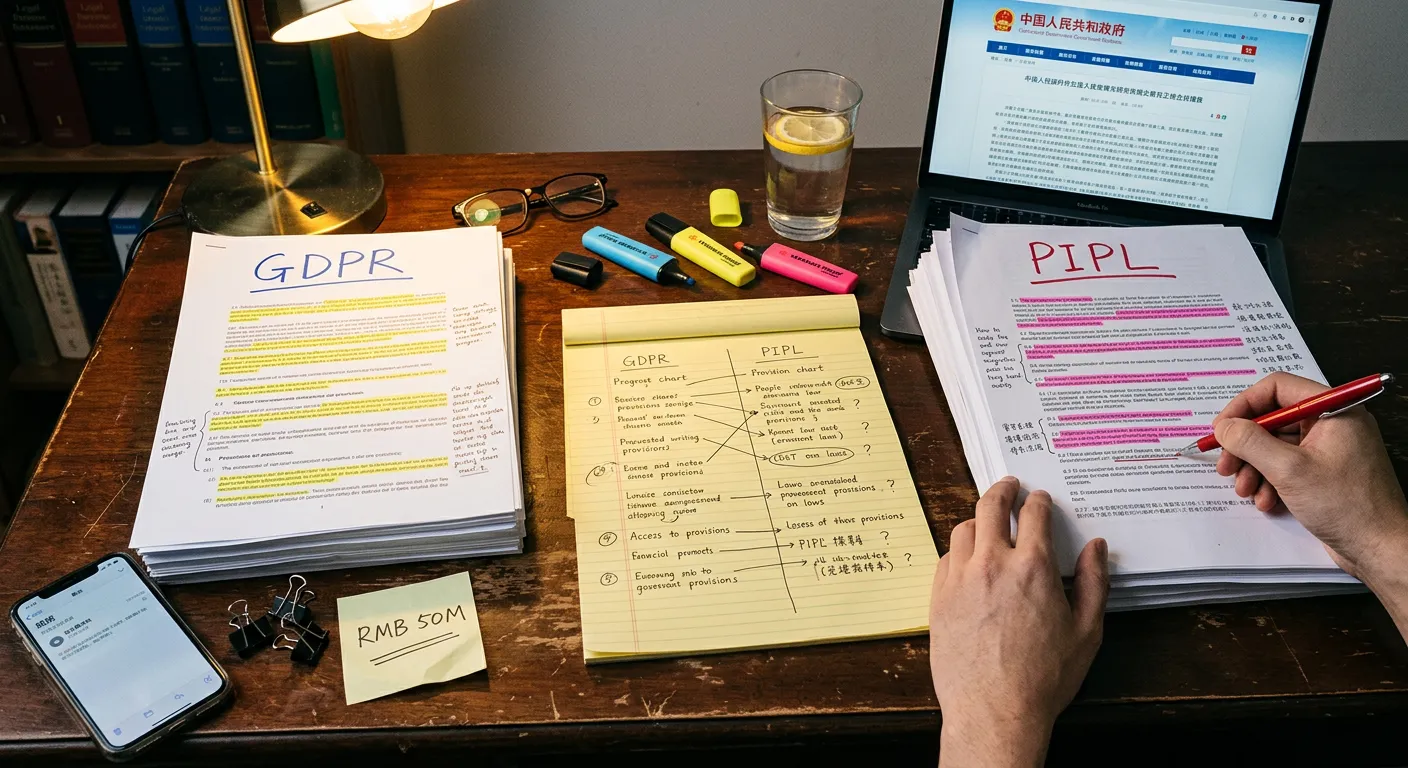
If your website collects any personal information from Chinese users, three separate laws apply to you. Even if your company is based in New York, London, or Berlin.
China's data privacy framework includes PIPL, DSL and the Cybersecurity Law. PIPL applies globally to any company processing Chinese residents' personal data.

Website Hosting in China: Where the Server Sits
Mainland, Hong Kong or overseas: where the server sits decides the filing, the account and the route a Chinese visitor's request takes.
Where to host a website for China: mainland, Hong Kong or overseas, which provider account can file, what a CDN needs, and what PIPL says.

Website Localisation for China: A Full Rebuild
Translating your website into Chinese covers about 10% of what localisation actually means. The other 90% is payments, trust signals, cultural cues, and customer service expectations that most Western companies haven't thought about.
China website localisation covers Simplified Chinese, Alipay and WeChat Pay integration, trust signals, cultural adaptation, content tone and customer service standards.

The Great Firewall: What It Blocks and How to Cope
Blocked is the easy case. The dependency that answers and then never finishes is the one nobody on your team will ever see.
What a website in China can and cannot reach, host by host, with the vantage point and the test date on every row.

Mobile-First Design in China Means Mobile-Only
In China, 'mobile-first' is already outdated. Over 95% of internet users access the web from their phones. If your site isn't built for mobile, it doesn't exist.
China's internet is mobile-only. This guide covers design principles, WeChat browser compatibility, the super-app ecosystem and mini-program strategy for foreign brands.

Baidu Keyword Research Tools and Methodology
You can't rank on Baidu by translating your Google keyword list into Chinese. Here's how keyword research actually works for China's search engine.
Keyword research on Baidu requires different tools and methods than Google. This guide covers Baidu Index, Keyword Planner, 5118, and Chinese search behaviour.

Baidu SEO: Ranking on China's #1 Search Engine
Most foreign companies optimise for Google. In China, that's like advertising on a billboard nobody drives past.
Baidu dominates Chinese search with 724 million monthly users. Learn ranking factors, on-page optimisation, ecosystem strategy and mistakes foreign companies make.

China's Search Engines Beyond Baidu
Four other search engines control a combined 25-30% of China's market between them, and each one is wired into a different corner of the Chinese internet.
Baidu controls 60% of China's search, while Sogou, 360 Search, Shenma and Toutiao Search each serve different audiences worth knowing about.

ICP Licence and ICP Filing for Foreign Firms
If you want to host a website in mainland China, you need an ICP. No exceptions. But there are two types, and confusing them can cost you months.
Every site on a mainland server needs an ICP filing, made by a mainland company. Paid information services also need a licence, with ownership caps.
Need help with your China web strategy?
These guides cover the basics. If you need hands-on help getting your WordPress site working in China, we're here for that.
Talk to us